Fort Valiance Region
Lake Starfall
The Star-Metal Waters
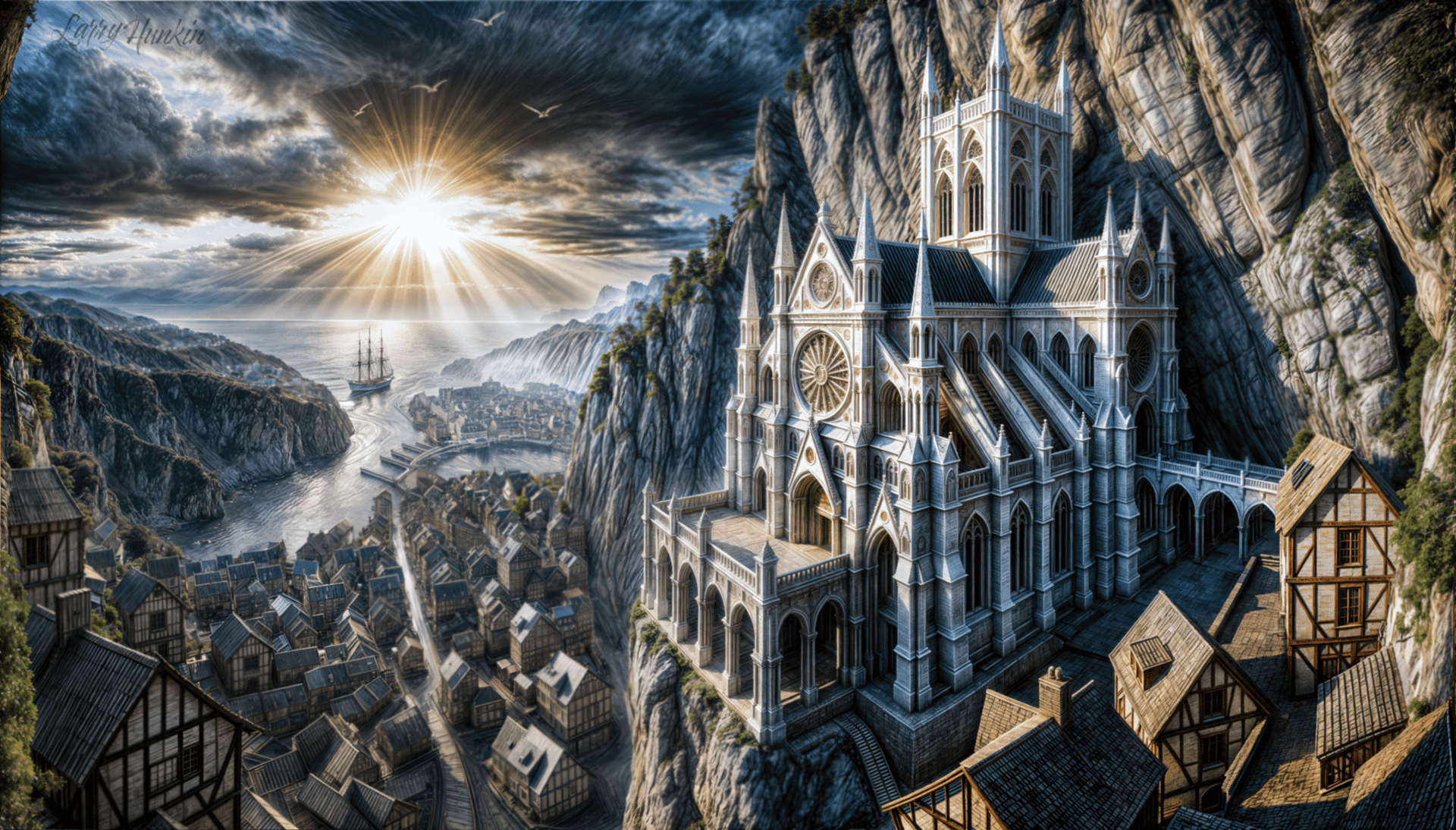
The Crater Rim rises above the star-metal waters
Population
~200 (mining community)
Location
Stonetalon foothills
Distance
40 mi northeast
Economy
Star-metal, fishing
Overview
High in the foothills where the mountain slopes begin their ascent toward the Stonetalon Range, a lake of extraordinary properties occupies a circular depression that geological evidence suggests originated from cataclysmic impact. Lake Starfall takes its name from the meteorite that ancient legends claim fell from the stars in an age before recorded history, striking earth with such force that it carved the deep basin now filled with waters of unusual character.
The lake sits approximately forty miles northeast of Fort Valiance, accessible via a mountain trail. The Crater Rim — a raised circle of ancient stone rising three hundred feet — forms a natural amphitheater. Caledrian tradition holds the rim as sacred space, marking it with stone cairns and maintaining a network of prayer-ways that complete the circle.
Mysterious Properties
Luminescent Waters
Deeply emerald in daylight, faintly phosphorescent in darkness. Items submerged resist corrosion with remarkable efficacy — iron weapons retrieved after decades emerge rust-free. Scholars suggest the water exists in partial separation from normal temporal flow.
Never Freezes
While the surface may develop a thin skim of ice in severe cold, the water beneath remains liquid. The ice that forms is so crystalline the lake bed stays visible. The altitude and climate should produce complete freezing, yet the water resists.
Star-Metal Deposits
A rare material of silver-grey coloration found nowhere else in the Morgath region. It accepts magical enchantments with unusual facility, holds an edge with extraordinary persistence, and resists certain types of magical manipulation.
The Deep
The lake's center plunges to depths that resist measurement. Divination spells report contradictory readings — some suggesting bottomless immensity, others shallow ground fifty feet below. Divers report temperatures that should cause rapid hypothermia, yet survive depths that should be impossible.
Hazards & Warnings
Something in the Deep
During severe storms, massive silhouettes rise toward the surface before retreating into darkness. A recent fishing expedition returned with traumatized crew — their hull bore parallel gouges as though something with immense claws had examined and released the boat.
Seismic Activity
Tremors originate from beneath the lake, becoming more frequent. Mining sites destabilize. The water level has risen six inches this season. The fishing catch has grown erratic — unknown species appear bearing deformities suggestive of arcane radiation exposure.
Pre-Worked Star-Metal
Prospectors have discovered ancient fragments showing metallurgical sophistication equal to contemporary artificers. Mining tools of unknown composition recovered from undisturbed depths. The previous mining operation ceased not by choice, but through catastrophic event.
Adventure Hooks
The Storm Watcher
Lightning during a storm struck the lake's surface and didn't dissipate — it sank. The water glowed for three hours afterward. The mining community debates whether this was a natural phenomenon or a signal. Something responded from the Deep.
Ancient Miners
Pre-worked star-metal fragments and ancient tools suggest a previous civilization extracted the resource extensively — then abandoned the site. What did they awaken, and is history repeating?
Accelerating Tremors
The seismic activity worsens. The mining community must decide: accelerate extraction while deposits remain accessible, or abandon the region entirely before whatever is awakening fully emerges.
The Crater Rim Cairns
Caledrian elders report their prayer-cairns on the rim have shifted overnight — repositioned into a pattern that matches no known ritual. The cairns are ancient and immensely heavy. What moved them, and what does the new pattern signify?
Related Settlements
Fort Valiance scholars investigate yearly. Ironholt is connected via a treacherous mountain pass. Hammerfall competes for the region's mineral wealth.
Nearby Communities
Full Region MapGreystone
Mining town
Ironholt
Dwarven forgehold
Brightwater
Lakeside village
Hearthmere
Trading post
Shadowreach
Frontier outpost
Stormwatch
Coastal watchtower
Highcliff
Monastery village
Windsreach
Highland shepherds
Fort Crestwave
Naval garrison
Fort Greythorn
Border outpost
Thornhaven
Blighted village
Yanthara
Elvish settlement