Garrison
~400 soldiers
Commander
Captain Marlowe Seabrook
Distance
40 mi south
Purpose
Coastal defense & naval control
Highcliff Generator
Weather, NPCs & encounters
Overview
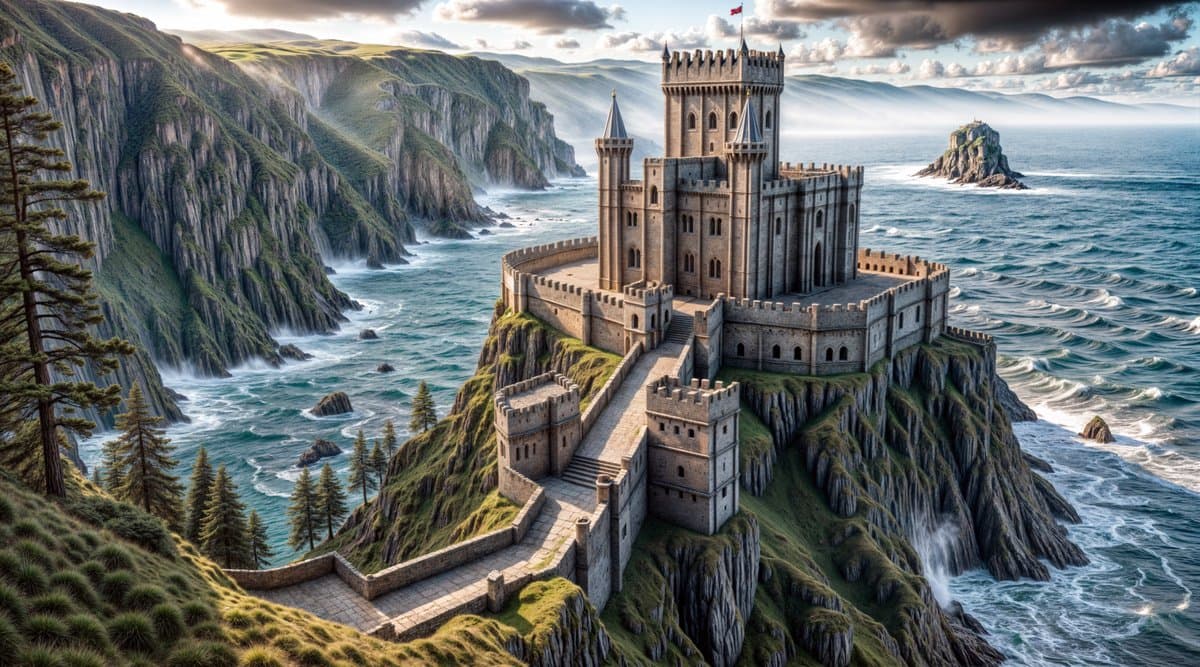
Highcliff Castle rises like a broken tooth from the edge of the world. Built atop sheer chalk-white cliffs that plunge two hundred feet to the churning sea below, the fortress dominates the coastline with an almost menacing presence. The constant howl of wind through its battlements, the endless cry of gulls wheeling overhead, and the salt spray that coats every stone combine to create an atmosphere both majestic and profoundly isolating.
The castle's primary charge is absolute: no vessel may traverse the treacherous waters of the Serpent's Reach without first signaling for safe conduct. Those who attempt to slip past without authorization do so at their peril — the castle's formidable coastal artillery can reduce even sturdy merchant vessels to splinters at distance.
Connected to Fort Valiance by a coastal road through bandit-haunted terrain, the castle is supplied regularly via barges on the Aldwyn River. Local legend claims it was built not merely to protect trade routes, but to maintain vigilant watch over something far older and stranger — the domain of the Serpent itself.
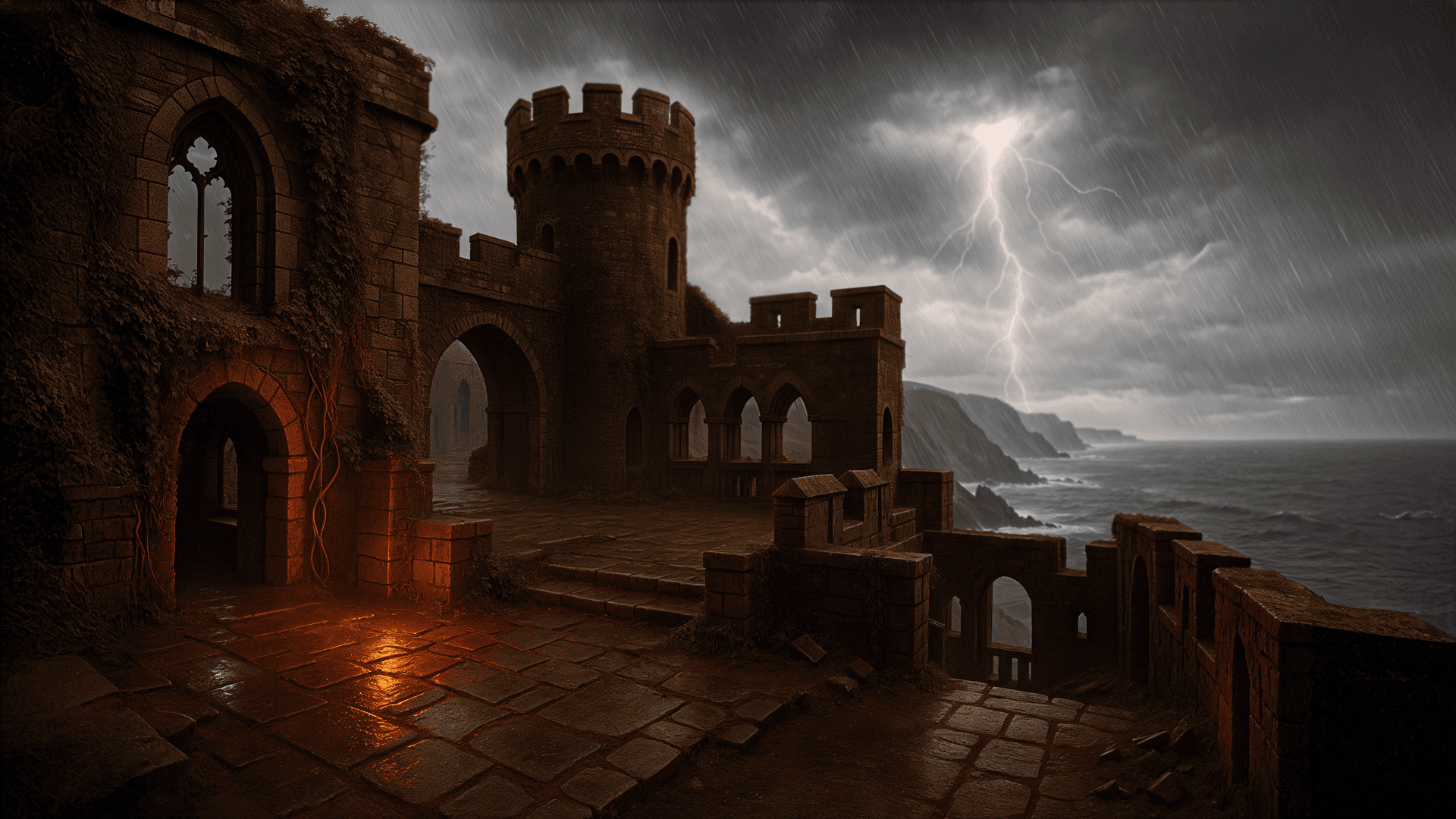
The cliffs of Serpent's Reach
Fortifications
The castle's defensive architecture represents the culmination of centuries of coastal warfare. Outer walls of locally quarried stone are reinforced with battlements positioned for overlapping fields of fire, designed to withstand both land-based assaults and naval bombardment.
Coastal Artillery
Six heavy ballistae and three trebuchets can engage vessels at two to three hundred yards. A well-placed shot can hole a hull or bring down a mast.
Signal Tower
A massive bonfire platform at the castle's highest point, visible thirty miles out to sea at night. By day, an elaborate system of flags and smoke signals communicates with passing vessels.
Hidden Passages
Underground tunnels carved into the cliff face serve as escape routes, ammunition storage, and access to a hidden dock in a sea cave — an evacuation route enemies would never suspect.
Constant Watch
Every sail on the horizon is tracked with meticulous attention. The garrison maintains around-the-clock surveillance of the approaches.
The Serpent's Reach
The waters immediately below Highcliff Castle hold a sinister reputation. The Serpent's Reach is, by any objective measure, a ship graveyard. Jagged formations of limestone pierce the water like the teeth of some gigantic maw, positioned in patterns no chart can fully predict. Currents are violent and unpredictable, often reversing direction without warning. Sudden storms brew and dissipate within minutes.
Hundreds of ships have been claimed over the centuries. Some are ancient — rotting wrecks whose origins are lost to time. Others are disturbingly recent. At low tide, jutting masts and skeletal hull ribs become visible, along with the grisly remnants of cargo long since picked clean.
The Serpent of the Reach
The greatest terror is not mere geography. Sailors who have spent years plying these waters swear they have glimpsed something moving beneath the surface during violent storms: massive coils that dwarf the largest ships, or the glint of scales that catch the light in ways no natural creature should. Captain Seabrook absolutely forbids fishing in the deepest sections, speaking only of "respecting ancient arrangements" and "not disturbing what should remain undisturbed."
The Village at the Cliff's Base
Approximately two hundred civilians — fishers, net-menders, rope-makers, and garrison families — cling to the narrow beach at the cliff's base. Access is treacherous: a steep switchback path barely wide enough for a laden donkey, slicked with algae during storm season.
The economy revolves around fish, rope, and repairs. Fish-drying racks line the beach, rope-makers work in workshops carved into the cliff face, and boat repair yards employ skilled craftspeople who understand the Reach's unique challenges.
The Saltspray Tavern
Built from salvaged ship timbers, roofed with thatch constantly replaced by the corrosive salt wind. Proprietor Muriel Blackwater, a former soldier's wife, has run the establishment for nearly three decades. She maintains careful neutrality between garrison and visiting sailors, making the tavern a place where news and information flow with surprising freedom.

A Highcliff defender stands vigilant
Captain Marlowe Seabrook
Fifteen years commanding Highcliff marks Seabrook as either remarkably capable or possessed of unusual patience with isolation. Most observers suggest both. A product of the naval tradition, he walks with a pronounced limp from a wound received in the coastal wars nearly two decades ago, his left hand bearing the distinctive scarring of old burns.
Known for exceptional fairness combined with absolute, uncompromising discipline. He tolerates no smuggling, permits no piracy, and enforces maritime law with a rigor that has brought him into conflict with nobles and merchant princes expecting preferential treatment. Under his command, not a single successful raid or breach has occurred.
What makes Seabrook unusual is his deep superstition regarding the Serpent. He personally inspects every signal from approaching vessels, forbids fishing in the deep Reach, and becomes visibly agitated if the subject is raised. Long-serving garrison members have learned not to probe too deeply — some questions are simply not to be asked.
Adventure Hooks
The Phantom Signal
A vessel matching no known company or navy has been spotted off the coast. It vanishes in the mist when fired upon. No wreckage washes ashore. Seabrook has restricted all shore leave.
The Diplomat's Demand
A Fort Valiance noble arrives with orders to increase maritime taxation, suggesting Seabrook's Serpent superstitions are costing revenue. The captain refuses to open the deep Reach to fishing.
Salvage Rights
A recent storm has revealed an ancient shipwreck with glimmering cargo in the shallows. Seabrook refuses salvage permission — it lies too close to the forbidden deep Reach.
The Serpent's Gift
A soldier vanishes from night watch near the signal tower. Days later, a bioluminescent object from the deepest ocean trenches washes ashore. Seabrook orders all evidence hidden.
Related Settlements
Fort Valiance serves as primary garrison headquarters to the north. Windsreach lies further south along the coastal trade route. Inland, Fort Crestwave guards the Aldwyn River approach.